Watch It First
Vibrato and tremolo get mixed up constantly, and honestly, that mix-up is half the reason pedals like this one get overlooked.
Tremolo pulses your volume up and down. Vibrato pulses your pitch up and down. The TC Electronic Tailspin is built purely around the second one, chasing that warbly, seasick, classic ’80s vibrato sound with an all-analog bucket-brigade circuit.
It’s tiny, it’s cheap, and it does exactly one thing. Let’s see if that one thing is worth the pedalboard real estate.
What’s Under the Hood
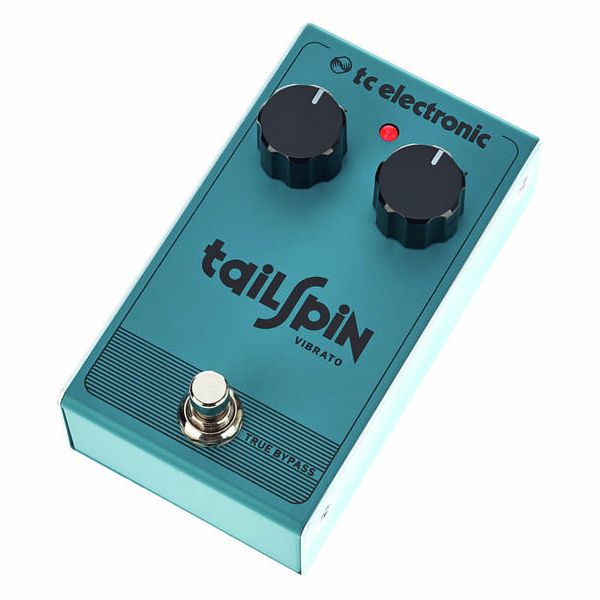
Two knobs. That’s the whole control set: Rate and Depth. No hidden menu, no app, no three-page manual required to get a usable sound.
The bucket-brigade analog circuit is what separates this from the flood of sterile digital vibrato emulations on the market. It genuinely warps the pitch in a way that feels organic rather than robotic, which is exactly why it built a cult following despite being one of TC’s cheaper stomp boxes.
True Bypass and Battery or 9V
True bypass means it’s transparent when off — no tone-sucking, no signal coloring you didn’t ask for. Power comes from either a 9V battery or a standard 9V supply (not included, though Thomann sells a matching one separately).
It’s a tiny footprint pedal too, so if your board is already packed with an overdrive, a compressor, and a delay, this squeezes in without forcing a redesign.
How It Actually Sounds
At low Rate and shallow Depth, it’s subtle — barely-there pitch movement that thickens a clean tone without anyone in the room clocking exactly why it sounds fuller.
Push both knobs up and it turns into full seasick wobble territory — the kind of sound you’d want on a surf-rock lead or a dreamy indie chord progression. Try it on something like a Fender Player II Jazzmaster and the vintage vibe basically writes itself.
It also plays nice with electric piano and synth sources, for anyone routing keys through a pedalboard — the samples on Thomann’s own product page actually demo this, and it holds up.
Where It Fits on Your Board
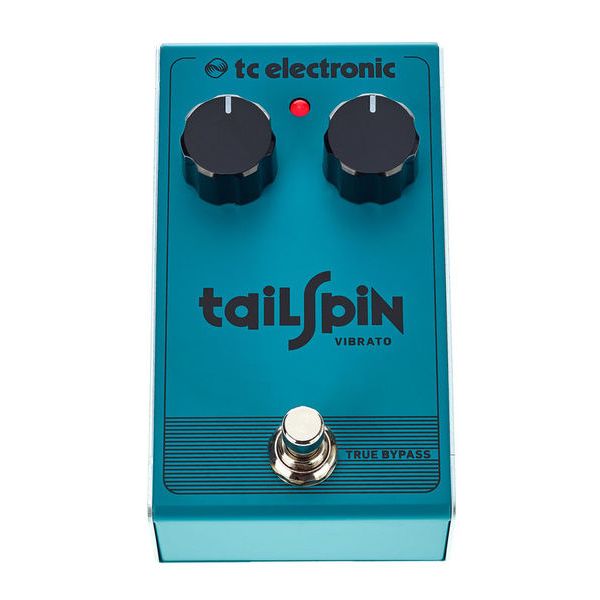
Vibrato pedals are usually happiest late in the signal chain, after your gain stages, so the pitch modulation doesn’t get chewed up by distortion or compression sitting in front of it.
If you already run something like a DigiTech Whammy 5 for dramatic pitch effects, the Tailspin is the subtle cousin — nowhere near as extreme, but useful in ways the Whammy just isn’t built for. Think texture, not spectacle.
Jazz players chasing that warm, slightly unstable vintage amp vibrato sound (the kind old tube combos had built in) will find this scratches the same itch — it’s one reason it shows up in roundups like our best guitar pedals for jazz list.
Vibrato vs Tremolo, One More Time
It’s worth spelling this out because pedal naming across brands is genuinely inconsistent — some manufacturers slap „vibrato” on a volume-modulation pedal and call it a day.
Vintage Fender amps famously had a „vibrato” channel that was actually tremolo (volume wobble), which confused guitarists for decades. The Tailspin does the real thing — actual pitch modulation, the way a guitarist bending a note repeatedly with a whammy bar would, just automated and smoothed out.
That distinction matters if you’re trying to recreate a specific classic tone. If you want the volume-pulse sound instead, you want a tremolo pedal, not this one — worth checking before you buy so you don’t end up with the wrong effect for the sound in your head.
For anyone still deciding between the two, it’s a five-minute rabbit hole worth going down before you spend money — better to know exactly which wobble you’re chasing.
Who Should Skip This
If you want wild, chaotic modulation with a hundred presets to dig through, this isn’t it — look at something like the EHX Mel9 instead if you want a modulation pedal that does a dozen different weird things.
And if you’re still building your first pedalboard and testing sounds at home before committing, plug it into something simple like a Roland Cube-10GX first — you’ll hear the pitch wobble clearly without a big rig getting in the way.
Curious what else TC Electronic makes worth owning? We rounded up the rest in our 8 best TC Electronic pedals guide.
Build and Everyday Practicality
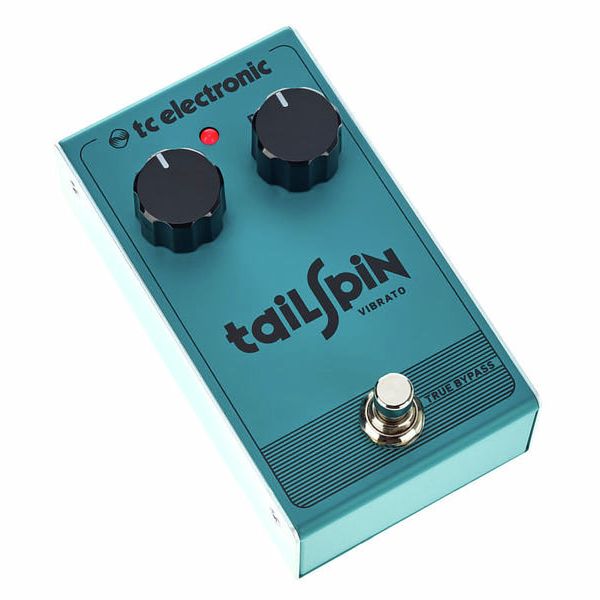
It’s a compact, single-footswitch enclosure — nothing fancy, no flashing LED rings or fancy graphics, just a solid metal chassis that’s been sitting on boards since 2016 without much reputation for failing.
The 9V battery option is a nice touch if you’re not running a dedicated power supply chain yet. Most players will still want a proper isolated power brick eventually, but it’s good to know you’re not stuck without one on day one.
Is it going to wow anyone with looks? Not really — and that’s fine. It’s a one-trick pedal that does its trick convincingly, which honestly matters more than a fancy paint job 😉
Specs at a Glance
- Type: Analog guitar effect, classic ’80s-style vibrato
- Controls: Rate, Depth
- Bypass: True bypass
- Power: 9V battery or 9V power supply (sold separately)
- Dimensions: compact single-pedal footprint, easy to fit on any board
- Circuit: All-analog bucket-brigade design
- Released: 2016, still in active production
Final Verdict
The TC Electronic Tailspin Vibrato is one of those pedals that’s easy to dismiss on a spec sheet and hard to dismiss once you actually plug it in.
It’s firmly a budget pedal, and it doesn’t pretend otherwise — no TonePrint app, no MIDI, no expression pedal input. What it does have is a genuinely convincing analog vibrato sound that punches well above its price tag.
If you’ve been chasing that classic pitch-wobble sound and don’t want to spend big to get it, this is one of the easiest recommendations in the vibrato/tremolo space right now. IMO it’s the kind of pedal you buy once, forget it’s even a „budget” option, and just keep using for years.