Watch It First
The Roland Cube Street EX has been around since 2014 and it’s still going strong – this one’s actually still sold new, no substitution needed here for once.
It’s Roland’s battery-powered, mic-and-guitar street amp, and it’s basically the industry standard busking rig at this point. Everyone who’s tried to bust one has either owned one or been jealous of someone who does.
Let’s get into whether it’s actually still worth buying in 2026, or whether newer battery amps have caught up.
Build & Design
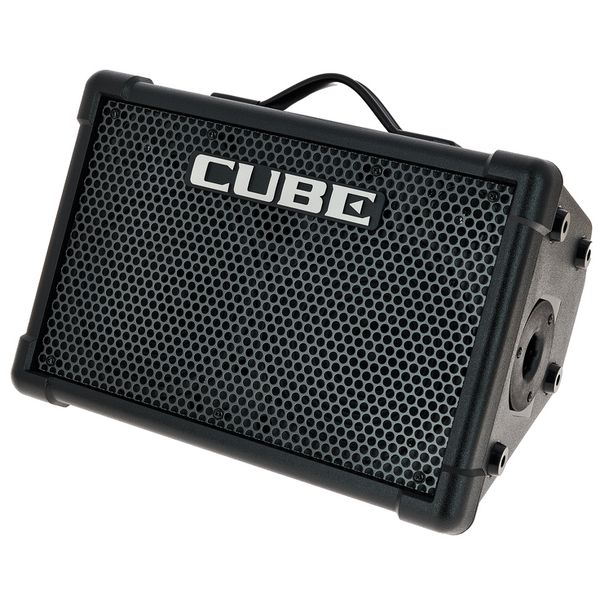
2x 8″ speakers plus 2x 2″ tweeters running in true stereo, all packed into a 7.4 kg box with a shoulder strap loop. It looks utilitarian, not flashy, which honestly fits the job description.
Power runs off the included mains adapter or 8x AA batteries, and Roland claims up to 20 hours in ECO mode. That’s genuinely enough for a full weekend of street sets without hunting for an outlet.
Two XLR Combo Inputs Change Everything
This is the feature that separates it from a plain guitar practice amp – two combo XLR/TRS inputs mean you can run guitar and vocal mic simultaneously, each with its own EQ and effects send.
Built-in Chorus, Delay, and adjustable Reverb cover the basics, plus COSM amp modeling on the guitar channel and a stereo line/AUX input for backing tracks. There’s even a i-CUBE LINK connection and the free CUBE JAM app for recording your busking sessions straight to your phone.
Two Cube Street EX units can be linked together in stereo for bigger sets too, which is a neat touch if you ever end up doing a duo gig.
Playability & Sound
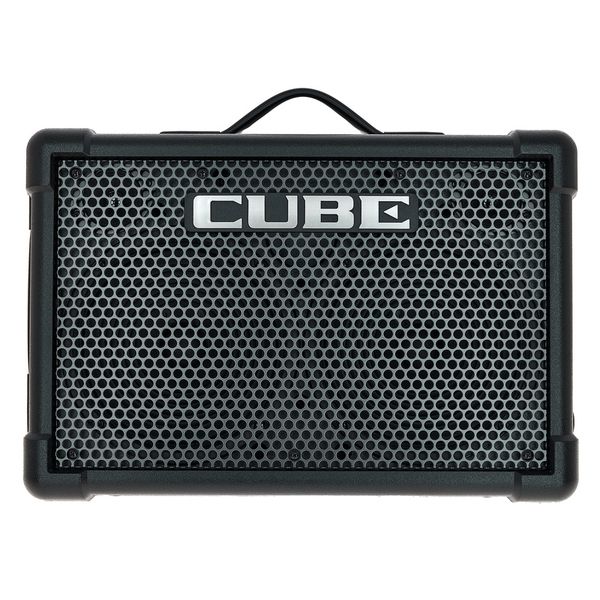
For its size, this thing is genuinely loud – loud enough to cut through street noise and traffic, which is really the entire point. Reviewers consistently mention being surprised how much volume comes out of a battery-powered box this size.
Clean tones are where it shines, which makes sense given the acoustic/singer-songwriter crowd it’s mainly built for – if that’s your world, it pairs nicely with anything from our best cheap acoustic guitars for beginners list or a step up like the ones in our acoustic guitars for intermediate players guide.
Electric players get COSM amp modeling on the guitar channel, and it’s fine for clean-to-crunch tones – honestly one reviewer noted the „crunch” model feels a bit weak, and IMO that tracks. This isn’t the amp for heavy riffing, it’s the amp for being heard over a crowd.
Worth calling out too: the CUBE JAM app is a genuinely underrated part of this package. You can record a busking set straight from the amp to your phone, layer a second take over the top, or just capture a rehearsal to review your set list later. It is not going to replace a proper multitrack recorder, but for a street performer wanting to check how a new song actually lands, it is a handy free tool that a lot of buyers never even discover.
Who It’s For
Buskers, obviously. Also acoustic singer-songwriters doing small unplugged gigs, anyone running a mobile PA for a tiny event, or someone who just wants one box that does guitar-plus-vocals without hauling a full PA system.
If you’re mainly an electric player chasing distortion and want this purely as a bedroom or gigging guitar amp, you’re overpaying for features you won’t use – a cheap electric guitar plugged into a dedicated modeling combo will serve you better and cost less.
If clean tone and portability are the priority, it’s also worth a look alongside our best guitars for clean tones roundup – the amp’s clean channel deserves a guitar that can actually show it off.
The Honest Niggles
- Batteries aren’t included in the box, and 8x AA adds up in cost if you’re not using rechargeables.
- The „crunch” amp model is genuinely one of the weaker COSM voicings Roland has done – don’t buy this expecting rock tones.
- No footswitch included or even connector for one, so switching effects mid-song means reaching down to the unit.
- At 7.4 kg it’s portable but not featherweight if you’re walking a busking route with a guitar and a stand too.
None of these matter much if you’re buying it for what it’s actually designed to do, which is street and small-venue acoustic performance.
How It Compares
The Roland Cube Street Mini is the budget little sibling – lighter, cheaper, but single main channel instead of the EX’s dual combo inputs. If you only need guitar or only need a mic, not both loud at once, it’s worth considering to save some cash.
Against battery-powered smart amps like the Positive Grid Spark Go, the Cube Street EX wins on raw volume and the dual XLR inputs, but loses on modern app connectivity and tone-matching software. Depends what you value more – horsepower or bells and whistles.
Specs at a Glance
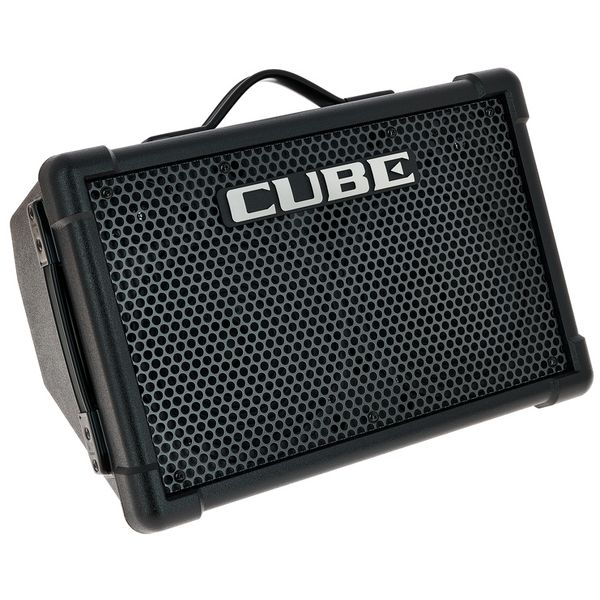
- Type: Battery-powered stereo combo, 4 channels
- Power: switchable 50W / 25W / 10W
- Speakers: 2x 8″ plus 2x 2″ tweeters, true stereo
- Inputs: 2x combo XLR/TRS, stereo line in, AUX in
- Effects: Chorus, Delay, adjustable Reverb
- Amp modeling: COSM (guitar channel)
- Power source: included PSB-12U adapter or 8x AA batteries (up to 20h ECO mode)
- Connectivity: i-CUBE LINK, headphone out, 2x footswitch jacks
- Weight: 7.4 kg
Final Verdict
The Roland Cube Street EX earns its reputation. Over a decade on the market and it’s still the amp people default to recommending for busking and small acoustic gigs, and that’s not an accident.
It sits in a fair mid-range price bracket for what it packs in – true stereo sound, dual mic/instrument inputs, and genuinely impressive battery life.
If you need one box that handles guitar and vocals loud enough to compete with street noise, this is still the amp to beat in 2026.