Watch It First
Small update before we start: the original VT40X badge has been retired at Thomann and folded into Vox’s 25th-anniversary refresh of the range.
What you can actually buy today is the Vox Valvetronix 40 Classic Blue – same 40W, same 1×10″ format, same hybrid tube-plus-digital preamp circuit that made the VT-series famous, just refreshed hardware and a new coat of that classic Vox blue vinyl.
If you were after the VT40X specifically, don’t panic – this is basically it, wearing new clothes. Let’s get into what it actually does.
Build & Design
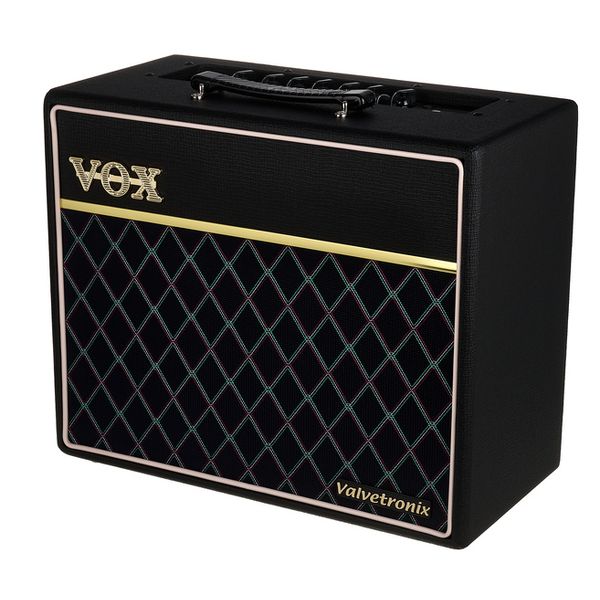
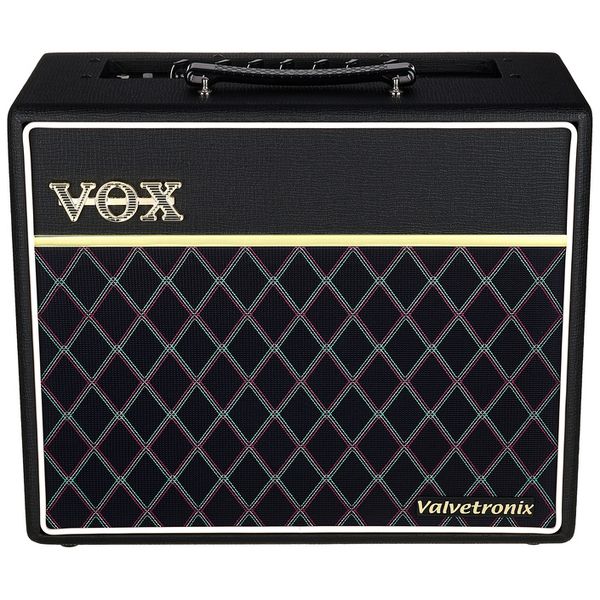
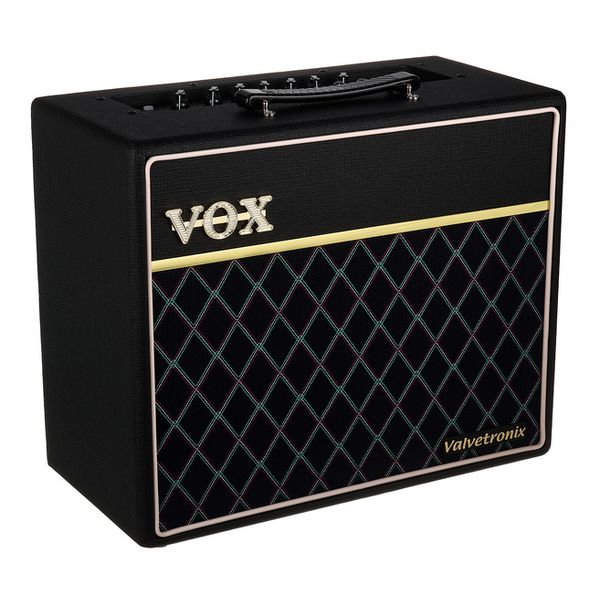
Classic Blue vinyl, cream grille cloth, gold piping – it looks like it wandered out of the 60s, which is exactly the point. Under that retro shell is a genuinely modern circuit though.
It weighs 9.5 kg and sits at 462 x 404 x 225 mm, so it’s a proper practice-room combo rather than something you’d want to carry to three gigs a week, though it’s not unreasonable for occasional gigging either.
The Hybrid Preamp Thing
This is the bit that makes Valvetronix amps different from most modeling combos. There’s an actual 12AX7 tube in the preamp stage doing real analogue work, with Vox’s VET+ (Virtual Elements Technology) modeling handling the amp character on top.
Vox says the DSP tube balance has been retuned on this refresh for smoother clean-to-crunch transitions when you roll back your guitar volume – and honestly, that responsiveness is the whole reason people keep coming back to these amps instead of going full-digital.
You get 11 amp models built in (20 if you dig into the Tone Room Editor software), 13 effects, and 33 onboard presets loaded with sounds modeled after famous players’ tones.
Playability & Sound
Where this amp genuinely punches above its bracket is versatility. Bluesy clean tones, jangly indie chime (it is a Vox after all), crunchy classic rock, and even a surprisingly credible high-gain solo setting are all in there.
If your thing is glassy clean tones, this deserves a spot on any shortlist next to our guide to guitars for clean tones – the amp side of that pairing matters just as much as the guitar you plug in.
Push it into the higher-gain models and it holds its own too, though if metal is your main focus you’ll get more mileage from something purpose-built – our roundup of amps built for distortion and overdrive covers heavier-leaning options if that’s the priority.
The onboard reverb and effects are usable in a pinch, not studio-grade, but they get the job done for practice and small gigs without needing a pedalboard.
One more thing worth mentioning about the hybrid preamp: because there is real tube circuitry involved, this amp responds to your guitar volume knob in a much more natural way than a fully-digital modeler. Roll off to 7 or 8 and the breakup cleans up gradually instead of snapping between two fixed states. That is a subtle detail on paper but it is the kind of thing that makes an amp feel like an instrument rather than a preset machine.
The Tone Room Editor software (free download, USB connection) is also worth setting up even if you never touch it again after the first session. It unlocks extra amp models, lets you build custom presets, tweak individual effect parameters more finely than the front panel allows, and back up your settings before a gig so a stray knob bump does not wreck your tone.
Who It’s For
This is a great all-rounder for someone who plays across genres and doesn’t want three different amps to cover clean, crunch, and lead. It’s also a solid step-up amp for players outgrowing a beginner combo.
Pair it with something versatile like a Squier Sonic Stratocaster HSS or a Squier Sonic Telecaster and you’ve got a rig that can genuinely do blues, rock, pop, and light metal without breaking the bank.
If you already know you only ever play one genre – say, strictly clean blues, or strictly high-gain metal – a dedicated single-voiced amp will probably serve you better long term.
The Honest Niggles
- No footswitch included – the VFS5 is sold separately and you’ll want it for live channel switching.
- No effects loop, no MIDI, no Bluetooth – it’s a fairly bare-bones connectivity package for 2026.
- The single 10″ speaker starts to feel like a limiting factor once you push it loud in a full band mix.
- Being brand new to Thomann (since March 2026), long-term reliability data is thin – the older VT-series had a solid track record, but this exact revision is unproven.
None of these are dealbreakers for a practice-and-small-gig amp, just know what you’re getting IMO.
How It Compares
- Boss Katana 50 Gen 3 – more effects and connectivity, a slightly more „digital” feeling clean tone, similar price bracket.
- Fender Blues Junior IV – all-tube, one trick, but that trick (Fender clean/blues breakup) is arguably better than anything modeled here. If that’s your only reference point, check out our Blues Junior IV review.
If you want to push the drive character further without relying purely on the amp models, a pedal from our best overdrives for Vox amps list pairs naturally with the tube-driven preamp here.
Specs at a Glance
- Type: Modeling combo, hybrid tube/digital preamp
- Power: 40W
- Speaker: 1x 10″
- Preamp tube: 1x 12AX7
- Amp models: 11 onboard (20 via editor software)
- Effects: 13 onboard
- Presets: 33 onboard (60 via editor)
- Connectivity: USB, Aux in, headphone out, footswitch jack (footswitch sold separately)
- Dimensions: 462 x 404 x 225 mm
- Weight: 9.5 kg
- Colour: Classic Blue
Final Verdict
The Vox Valvetronix 40 Classic Blue is a genuinely versatile, mid-range practice-to-small-gig combo that carries the VT40X’s DNA forward with a real tube stage keeping things feeling alive rather than static.
The lack of an effects loop or built-in Bluetooth are the only real gaps for 2026 pricing, but the tone quality and versatility more than make up for it.
If the VT40X name was what brought you here, buy with confidence – this is that amp, matured.