Watch It First
Why I Love the Epiphone Jack Casady Bass? Because it doesn’t sound like anything else in your collection, and that’s exactly the point.
Jack Casady played bass for Jefferson Airplane, and this signature model has been in Epiphone’s lineup in one form or another for over two decades now. That’s staying power most signature instruments never get close to.
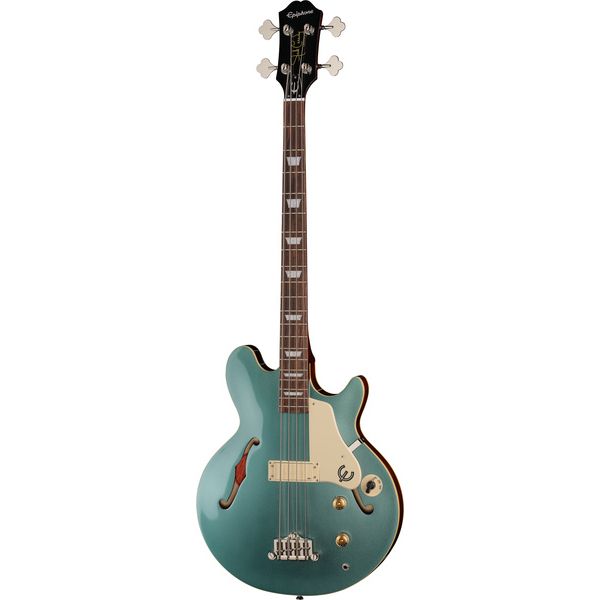
It’s a semi-hollow bass with a single low-impedance humbucker, and it occupies a genuinely weird, wonderful tonal space between a Rickenbacker, a Höfner, and a P-Bass. Let’s dig into why.
Build and Materials
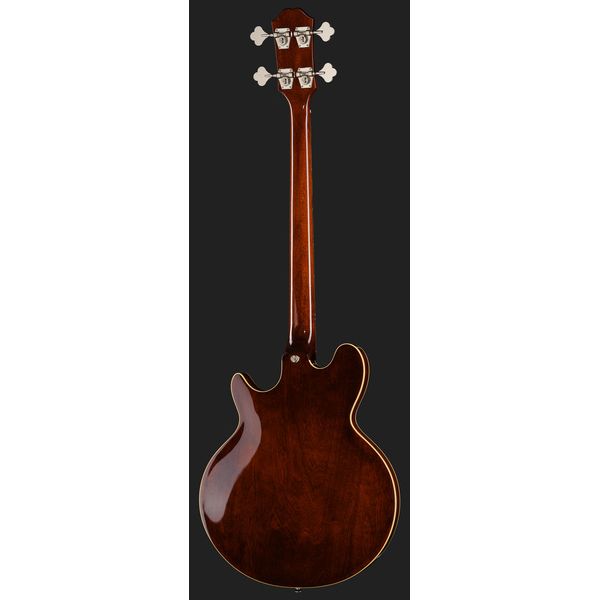
Laminated maple top, back and sides, mahogany neck, Indian laurel fretboard. It’s a proper semi-hollow build, not just a chambered body pretending to be one.
The body size sits close to a Gibson ES-335, but the neck profile is closer to a P-Bass – a C-shape that most players find immediately comfortable, no adjustment period needed.
Hardware
Single JCB-1 low-impedance humbucker, one volume, one tone, and a 3-way rotary switch that acts as a passive tone-shaping tool rather than a pickup selector (there’s only one pickup, after all).
- 864mm long scale, 20 frets
- 41.5mm nut width
- C-profile mahogany neck
If you’ve spent time with an Ibanez AS73 on the guitar side, the semi-hollow construction logic will feel familiar even though this is a completely different instrument in a completely different register.
Playability and Feel
This bass is lighter than you’d expect looking at it. The hollow chambers cut a meaningful chunk of weight compared to a solid-body bass of similar size, which your shoulder will thank you for after a long set.
The neck is comfortable from the first pickup. No awkward D-profile learning curve here like you get on some budget basses – it’s closer to a classic Fender feel, just on a slightly bigger body.
Balance on a strap is good, though the size does mean it sits a bit differently than a Jazz or P-Bass. Taller players won’t notice. Smaller players might want to try one in person first.
Tone and Sound
This is where the Jack Casady earns its reputation. The low-impedance pickup design gives it a deep, woody, almost upright-bass quality on the low end, while still having enough definition to sit in a rock mix.
Roll the tone control down and you get something close to a Höfner „beatle bass” thump – round, vintage, perfect for anything from soul to classic rock. Roll it up and there’s genuine growl and clarity for more modern styles.
It’s not a slap bass. If your whole style revolves around percussive slap and pop, this isn’t your instrument – the semi-hollow body and passive electronics aren’t built for that kind of attack.
But for fingerstyle players chasing something between vintage warmth and modern flexibility, it’s genuinely special. Fans of the tone on the Epiphone EB-3 will find a similar vintage-forward philosophy here, just wrapped in a hollower, airier package.
Who Is This For
Players chasing a specific vintage tone – think 60s and 70s rock, soul, jazz-adjacent playing – are the obvious target. Session players who need a distinct tonal color to pull out will get a lot of mileage here too.
It’s less obviously suited to metal, hard rock with heavy pick attack, or anyone who needs an aggressive modern tone as their bread and butter. This bass has a personality, and that personality is vintage and woody, not scooped and modern.
Honest Niggles
Feedback at high stage volume is a real consideration with any semi-hollow bass, and this one is no exception. If you’re running high gain or standing right in front of a loud cab, you’ll need to manage your position on stage.
The stock strings get mixed reviews – several owners report swapping them out immediately for something better, so budget for a string upgrade if you’re buying new.
Cases are also oddly hard to find for this exact body shape. A generic hollowbody bass gig bag works, but a properly fitted hard case takes some hunting.
And at this price point, you’re competing with some serious solid-body basses. If tone flexibility across genres matters more to you than that specific vintage voice, a more conventional bass might serve you better.
Specs at a Glance
- Body: Laminated maple, semi-hollow
- Neck: Mahogany, C-profile
- Fretboard: Indian laurel
- Scale: 864mm (long scale)
- Frets: 20
- Nut width: 41.5mm
- Pickup: JCB-1 low-impedance humbucker
- Controls: 1x Volume, 1x Tone, 3-way rotary switch
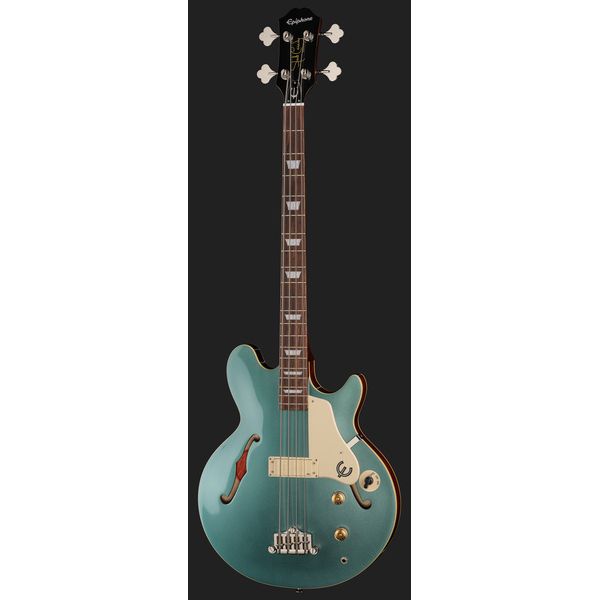
- Finish: Faded Pelham Blue (also available in Sparkling Burgundy)
How It Compares
Against a Höfner-style violin bass, the Casady has more low-end authority and a more conventional playing feel – no oddball short scale to adjust to. Against a standard P-Bass, it trades some punch and aggression for character and air.
If you want maximum tonal flexibility in one instrument, something like the Warwick RockBass Streamer 4 covers more stylistic ground. The Casady isn’t trying to be a do-everything bass – it’s trying to be the best version of one specific, gorgeous tone.
It’s also worth a look next to the Sire Marcus Miller P5 if you’re torn between vintage character and modern P-Bass reliability – two very different philosophies at a broadly similar price tier.
Setup and Long-Term Ownership
Out of the box, expect to want a proper setup regardless – action and intonation from the factory are usable but rarely optimal on any semi-hollow instrument, since hollow bodies are more sensitive to humidity and seasonal changes than solid-body basses.
Owners who’ve had theirs for years report the construction holding up well, with the main maintenance point being occasional truss rod tweaks as the seasons change. That’s normal for any semi-hollow instrument, not a flaw specific to this model.
Final Verdict
The Epiphone Jack Casady Bass isn’t for everyone, and honestly, it’s not trying to be. It’s a specialist’s instrument for players who want a specific, vintage-leaning tone with real character rather than a blank slate.
If that’s the sound in your head, few basses at this price get you there as convincingly. The semi-hollow construction, the low-impedance pickup, the whole design philosophy – it all points toward one goal, and it hits that goal well.
Just go in knowing what you’re buying: this is a mood, not a Swiss army knife. For the right player, that mood is exactly what’s missing from their collection.